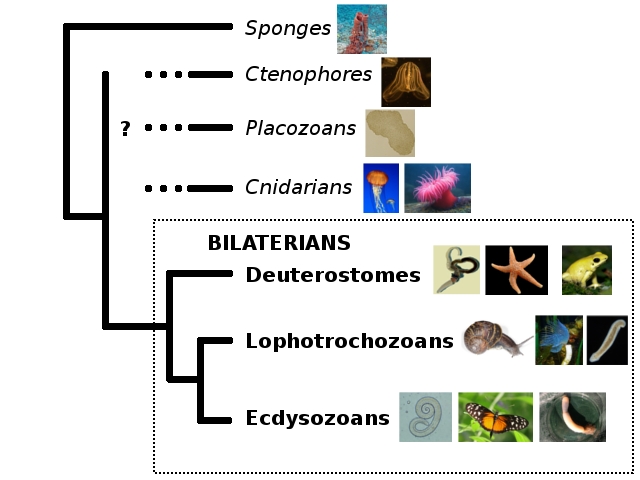
Which Are Protostomes . The sister group of the deuterostomes are the protostomes, which comprise two major groups, the lophotrochozoans (including flatworms, molluscs, annelids among other groups) and the ecdysozoans (including arthropods, nematodes and a number of smaller taxa) (fig. The distinction is based on differences in their early cell cleavage, coelom formation, and the fate of the blastopore.
Protostomes Vs. Deuterostomes: What Is The Difference? – Diffzi from diffzi.com
These pouches go on to enlarge and form the coelom. They also have developed gills or lungs for respiration.
Protostomes Vs. Deuterostomes: What Is The Difference? – Diffzi
Why are molluscs believed to be an advanced group of species as compared to annelids? A protostome, also called protostomia is a phylum under kingdom animalia (animals). The endoderm forms a pair of pouches that eventually fuse together.
Source: www.ck12.org
Protostomes include animals such as platyhelminthes, molluscs, arthropods, annelids, nematodes, and many other lower phyla. When the embryo develops, the protostomes first form the mouth from the blastopore, and the anus develops later after the mouth has been created. During embryonic development blastopore forms the mouth on the […]
Source: www.mun.ca
Molluscs, annelids, platyhelminths, and rotifers. The mouth of the protostomia (proto, “first”; Why are molluscs believed to be an advanced group of species as compared to annelids?
Source: slideplayer.com
Protostomes and deuterostomes together form a monophyletic clade. Why are molluscs believed to be an advanced group of species as compared to annelids? Protostomes are primitive invertebrates while deuterostomes include echinoderms and chordates.
Source: studylib.net
Protostomes protostomes include flat worms, annelids, arthropods, molluscs and some minor phyla. This division is helpful in understanding the relationships between different groups of. Why are molluscs believed to be an advanced group of species as compared to annelids?
Source: www.slideserve.com
Among most of the protostomes, the coelom is formed via splitting a solid mass of the embryonic mesoderm; The factor that leads to the advancement of mollusks over annelids is the distinct heads of mollusks, superior sense organs. They are the classifications used for complex animals.
Source: en.wikipedia.org
The factor that leads to the advancement of mollusks over annelids is the distinct heads of mollusks, superior sense organs. These pouches go on to enlarge and form the coelom. Protostomes include flatworms, annelids, arthropods, molluscs and some minor phyla.
Source: americangardener.net
During embryonic development blastopore forms the mouth on the […] A protostome is a group of animals that includes invertebrates like arthropods (insects and crabs), molluscs (clams and snails), and worms of phylum annelida. There is a deep split between protostomes and deuterostomes, since both groups diverged almost over 500 million years ago, which is almost as old as the.
Source: cambrianmammal.wordpress.com
This division helps in understanding relationships of different groups of animals. Protostomes protostomes include flat worms, annelids, arthropods, molluscs and some minor phyla. Hence, they are called schizocoelomates.
Source: www2.gwu.edu
Whereas deuterostomes include echinoderms, chordates, pogonophora, hemichordates and some minor phyla. The true coelomates are often categorized as either protostomes or deuterostomes (fig 9). They develop a completely functioning alimentary canal.
Source: www.researchgate.net
Deuterostomes are animals in which the anus develops from the blastopore and the mouth develops secondarily later in their development. Protostomia, group of animals—including the arthropods (e.g., insects, crabs), mollusks (clams, snails), annelid worms, and some other groups—classified together largely on the basis of embryological development. This division helps in understanding relationships of different groups of animals.
Source: whiskypedia.ro
Both of these deuterostomes and protostomes are the classifications used for complex animals. This division helps in understanding relationships of different groups of animals. Mouth first) are a huge clade of animals that includes the ecdysozoans ( arthropods, nematodes, and friends), platyzoa ( flatworms and allies), and lophotrochozoa (molluscs, annelids, and allies).
Source: en.wikipedia.org
They also have developed gills or lungs for respiration. Stoma, “mouth”) develops from the first The endoderm is formed from cells located near the blastopore.
Source: pediaa.com
Mouth first) are a huge clade of animals that includes the ecdysozoans ( arthropods, nematodes, and friends), platyzoa ( flatworms and allies), and lophotrochozoa (molluscs, annelids, and allies). A protostome is a group of animals that includes invertebrates like arthropods (insects and crabs), molluscs (clams and snails), and worms of phylum annelida. A protostome, also called protostomia is a phylum.
Source: www.sciencedirect.com
The mesoderm forms a pair of pouches that eventually fuse together. Both the groups can develop a completely functioning alimentary canal. Explore more about the definition of protostomes, their.
Source: diffzi.com
Develop mouth from the blastopore, spiral cleavage, split mesoderm to develop coelom. Stoma, “mouth”) develops from the first Whereas deuterostomes include echinoderms, chordates, pogonophora, hemichordates and some minor phyla.
Source: quizlet.com
This is because protostomes are animals such as flatworms, nematodes, segmented worms, mollusks, and arthropods. A protostome, also called protostomia is a phylum under kingdom animalia (animals). Why are molluscs believed to be an advanced group of species as compared to annelids?
Source: diffzi.com
Protostomes are divided into the ecdysozoa, e.g. It is generally assumed that protostomes and deuterostomes evolved from a common prebilaterian ancestor. They have spiral determinate cleavage, a mouth that develops before the anus in embryos, true tissues, and are.
Source: slidetodoc.com
Both contain a true coelom and are hence called the coelomates. The distinction is based on differences in their early cell cleavage, coelom formation, and the fate of the blastopore. There is a deep split between protostomes and deuterostomes, since both groups diverged almost over 500 million years ago, which is almost as old as the split between the major.
Source: www.difference101.com
Protostomes include flatworms, annelids, arthropods, molluscs and some minor phyla. This division helps in understanding relationships of different groups of animals. Protostomes and deuterostomes together form a monophyletic clade.
Source: vivadifferences.com
They develop a completely functioning alimentary canal. The endoderm forms a pair of pouches that eventually fuse together. 6.3 ap axis in basal protostomes.