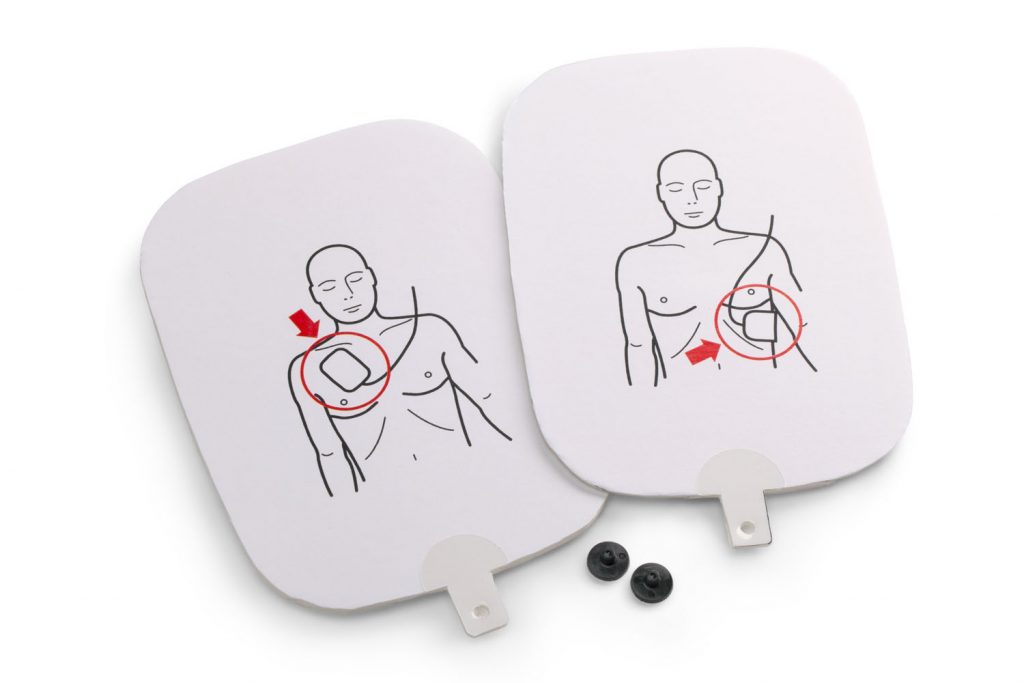
Where To Put Aed Pads . Always apply the pads to the chest according to the pictures on the pads. During a child cardiac arrest emergency, if an aed owner has a device that requires the installation of separate pediatric pads, the user would need to go through far too many steps just to get the aed to start analyzing the child’s heart rhythm, wasting precious time:
Guide To Aed Pad Placement - Mdpro Usa from medicaldevicepros.com
You may need to first dry the baby's back. Most aeds will give voice prompts to help bystanders use the device correctly.
Guide To Aed Pad Placement - Mdpro Usa
The second pad placed on the left side of the chest wall should be positioned underneath the victim’s armpit. If you can’t find it there, most aeds have an image printed directly on the electrode pads that show where they should be placed on a person’s body. Apply the pads (figure 12d).
Source: www.instant-cpr.com
Remove and place one pad at a time. Moreover, where do you put the aed pads on a child? To use an aed on a pregnant woman, place one pad above her right breast and place the other pad laterally on the left side of her rib cage.
Source: medicaldevicepros.com
Remove and place one pad at a time. Most aed pads come with written and visual instructions on where the place the pads. Place the other pad on the lower left side of the chest.
Source: savealifecpr.ca
The aim of pad placement regardless of age is to position the pads so that they deliver a shock right through the heart. Place one pad on the right side of the chest, just below the collarbone. It does not matter which pad you put on first and which one goes on second.
Source: www.firstaidforfree.com
If someone has a central line or port located on the chest wall, a pacemaker, chest tube, or other issue impeding placement of the pads, alternate placements are possible. If you can’t find it there, most aeds have an image printed directly on the electrode pads that show where they should be placed on a person’s body. Put the other.
Source: www.aliexpress.com
Thereof, where are aed pads placed on a child? Then bare the victim's chest and attach the adhesive aed pads in the appropriate locations. A common mistake is to place this pad on the front of the chest, this is likely to make an aed shock less effective.
Source: first-aid-product.com
Connect the pads to the aed. Ensure wires are attached to the aed box (figure 12f). Basic rules for attaching pads common to all aeds:
Source: www.researchgate.net
Aed pads for victims with pacemakers Aed technique for children attach the aed pads to the patient's chest. This can be achieved with smaller paediatric pads being placed in the positions as illustrated above on the child.
Source: www.seton.co.uk
One great thing about aed electrode pads is that the pads have graphics on them that show you where to place them on the body. During a child cardiac arrest emergency, if an aed owner has a device that requires the installation of separate pediatric pads, the user would need to go through far too many steps just to get.
Source: www.firstaidforfree.com
One great thing about aed electrode pads is that the pads have graphics on them that show you where to place them on the body. Aed's should be placed well within 3 minutes of anywhere within the facility. Aed's should be near a phone for calling 911.
Source: www.defibshop.com.au
Press the pad firmly onto the skin. Apply the pads (figure 12d). You need to make sure that they are placed correctly so the victim will get the maximum amount of shock necessary.
Source: www.aedmarket.com
Where do you put the pads? What is the normal placement for aed pads? Apply one pad on the upper right chest above the breast.
Source: www.learncpronline.net
The electrode pad placement might vary from one aed brand to the next, so be sure to check your aed’s owner’s manual for specific electrode pad placement instructions. Ensure wires are attached to the aed box (figure 12f). Remove and place one pad at a time.
Source: www.firstaidforfree.com
Connect the pads to the aed. Aed's should be placed well within 3 minutes of anywhere within the facility. Most aeds will give voice prompts to help bystanders use the device correctly.
Source: www.youtube.com
Put the other pad on the center of the baby's upper back. The pads should have a diagram on placement if you need a reminder. One pad should be placed below the collarbone on the upper right side of the victim's bare chest.
Source: www.paulkenny.training
Basic rules for attaching pads common to all aeds: A common mistake is to place this pad on the front of the chest, this is likely to make an aed shock less effective. Remove and place one pad at a time.
Source: slideplayer.com
For infants, apply a second pad to the back (figure 12e). The electrodes for the aed are typically adhesive pads. Aed's should be near a phone for calling 911.
Source: medicaldevicepros.com
Apply the second pad on the lower left chest below the armpit. This can be achieved with smaller paediatric pads being placed in the positions as illustrated above on the child. Where do you put the pads?
Source: shopee.co.id
The electrodes for the aed are typically adhesive pads. Both pads should be placed on the front of the chest, with one pad above the right nipple and the other pad placed on the left side, below the chest. In light of this there are some simple steps to consider when using an aed on a child.
Source: avive.life
Pad placement and shows where to place these defibrillator pads when using them in a cpr situation.view how to use an a.e.d: Apply one pad on the upper right chest above the breast. To use an aed on a pregnant woman, place one pad above her right breast and place the other pad laterally on the left side of her.
Source: www.eegelectrodecap.com
Aed's should be centrally located within the highest risk and most concentrated population area and near trained rescuers. Most aeds will give voice prompts to help bystanders use the device correctly. If it looks like the pads will touch, put one pad in the center of the baby's chest.